Florida businesses are dealing with a rapidly shifting commercial collections environment in 2026. Rising delinquency rates, new compliance rules, and AI-driven recovery tools are changing how collections departments operate across the state. Whether you're managing receivables for a business near Miami's Brickell financial district or tracking overdue B2B accounts from an office in Tampa Bay, the strategies that worked three years ago may be leaving real money on the table today.
Need help recovering commercial debts now? Contact HF Holdings Inc. at (877) 680-6064 for a free quote and same-day response.
How Is AI Changing Debtor Tracing and Recovery in Florida?
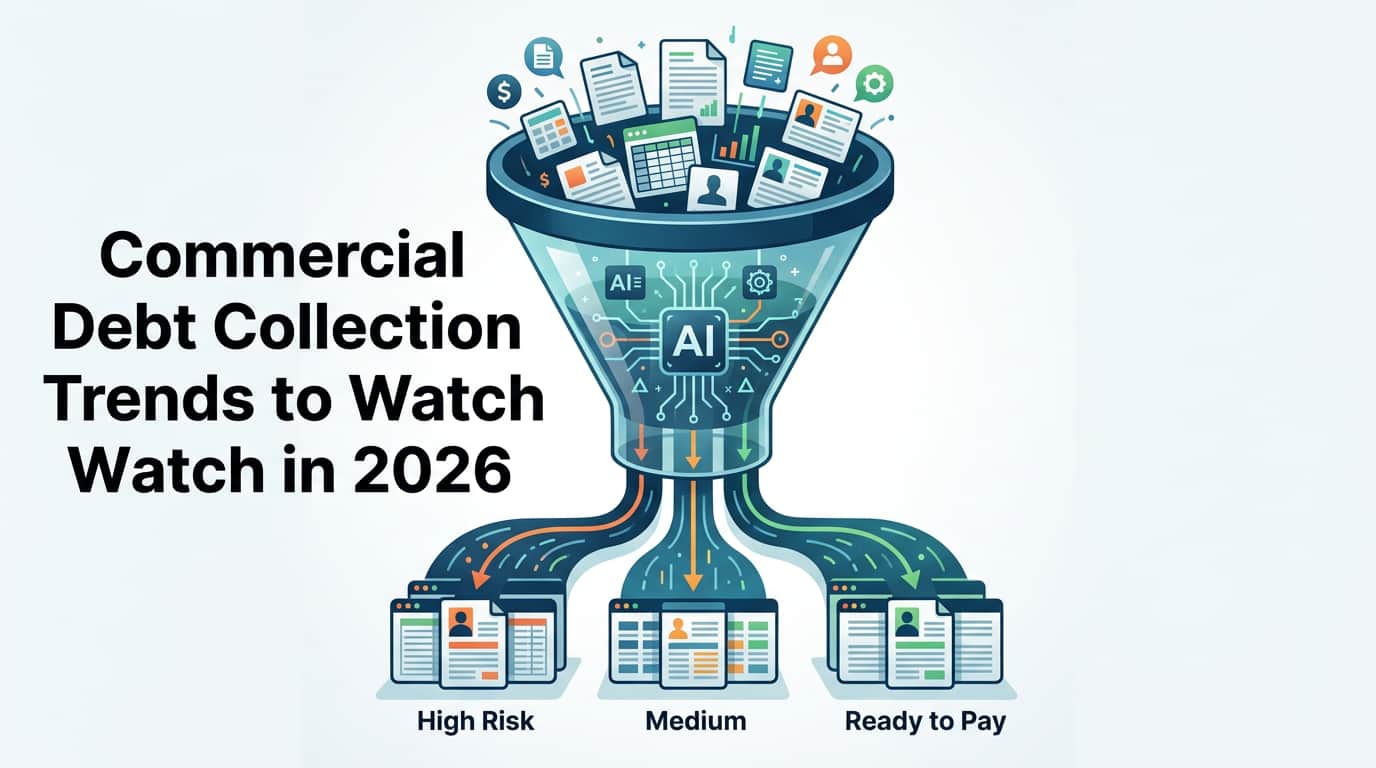
AI and machine learning now allow collections teams to predict which accounts will pay, which will need escalation, and which require skip tracing, often within the first 30 days of delinquency. These tools analyze payment history, industry data, and behavioral signals to assign risk scores to each account. Teams using predictive segmentation report recovering 20-35% more on early-stage placements than those relying solely on manual outreach.
For Florida-based collections departments, this matters because the state's diverse business environment, from tech startups in Orlando's Lake Nona innovation corridor to hospitality operators along the Gulf Coast, creates uneven debtor profiles. A one-size-fits-all dialing strategy doesn't work here. AI-powered tools segment accounts by industry risk, geographic location, and payment behavior, so your team focuses its energy where recovery potential is highest.
The shift away from phone-heavy tactics toward AI-powered, predictive smart collection methods is one of the clearest trends collections managers should be watching this year.
What New Florida-Specific Compliance Rules Affect B2B Collections in 2026?
Florida's B2B collection compliance requirements have tightened, and collections departments that haven't updated their internal policies are exposed to significant legal risk. The Florida Consumer Collection Practices Act (FCCPA) is broadly applied by state courts, and while it's technically a consumer protection law, its reach into commercial collections disputes has expanded through recent case decisions.
Here's what collections managers need to know in practical terms. Documentation requirements for demand notices have become more specific, with courts scrutinizing the timing and content of written communications. Interest accrual language on B2B invoices must align exactly with contractual terms to hold up in enforcement actions. When accounts require legal escalation, working with a qualified debt collection attorney ensures your claim is structured correctly before any filing occurs.
Utility providers across the state face an additional layer of oversight. Florida Public Service Commission guidelines govern how and when utility debt collection accounts can be placed with third parties, and those timelines are tighter than most general commercial accounts. Missing the placement window by even 30-60 days can meaningfully reduce recovery rates.
Staying compliant isn't just about avoiding penalties. It's what separates successful recoveries from accounts that fall apart before they resolve.
Are Digital Portals Replacing Traditional Collection Calls?
Yes, and the data supports it. Debtors who receive multi-channel communications, including email, SMS, and access to self-service payment portals, resolve accounts 40% faster than those contacted exclusively by phone. For commercial debtors especially, the ability to review balances, download invoices, and submit payments through a secure portal removes friction and eliminates the "we need to review this with our accounting team" delays that stretch out traditional call-based collection cycles.
Collections departments in Florida are building integrated communication workflows that combine automated digital touchpoints in the first 14-21 days with live collector contact for accounts that don't respond digitally. This hybrid model reduces cost-per-collected-dollar while maintaining human oversight for complex or high-value accounts.
If your current process still relies on outbound calls as the primary contact method, you're working harder than necessary. The technology to support a digital-first workflow is accessible to collections departments of nearly any size, and the return on that shift shows up quickly in your 60-day recovery numbers.
Why Are More Florida Businesses Choosing Mediation Before Legal Action?
Mediation-first collections strategies have grown significantly in Florida's B2B space because they protect something traditional litigation can't easily restore: the business relationship. A commercial debtor who owes $18,000 on an unpaid invoice may also represent $150,000 or more in future contracts. Pursuing immediate legal action can recover the debt but permanently close the door on that ongoing relationship.
Structured commercial mediation typically costs $1,500-$4,000 per case and resolves within 30-60 days. Litigation, by comparison, can run $8,000-$25,000 or more depending on complexity, and often takes 9-18 months to reach a judgment. For debtors who are genuinely facing temporary cash flow problems, a negotiated payment arrangement through mediation delivers faster cash recovery at a fraction of the legal cost.
Collections teams across Florida, particularly those managing accounts in professional services, construction, and distribution sectors, are building mediation checkpoints into their escalation workflows before referring cases to a debt collection attorney. Not every account warrants that step. But having the option embedded in your process means you're making a strategic decision, not a reactive one.
How Does Florida's 2026 Economic Climate Affect Commercial Recovery Rates?
Florida's economy in 2026 is performing unevenly across sectors. Strong demand in healthcare, technology, and defense contracting in areas like Orlando's Lake Nona Medical City is creating healthy commercial activity. At the same time, commercial real estate, retail, and hospitality operators are still absorbing the effects of elevated borrowing costs and tighter credit conditions from 2024-2025.
That uneven picture directly affects how collections departments should prioritize their portfolios. Accounts in growth sectors with strong cash flow histories should be worked aggressively in the first 60 days, because the debtor likely has the ability to pay. Accounts in distressed sectors may need a different approach, one that includes payment plans, settlement offers, or early mediation, to avoid pushing a debtor into insolvency before any recovery is possible.
Interest rates staying above 5% through much of 2025 increased the average Days Sales Outstanding (DSO) for Florida B2B companies by 12-18 days compared to pre-2022 baselines. Longer DSO means your placement timing matters more, not less. Accounts placed within 90 days of first delinquency recover at rates 50-60% higher than accounts placed after 180 days. That's not a small margin. It's the difference between a productive collections operation and one that's perpetually chasing old paper.
What Proactive Steps Should Florida Businesses Take for 2026 Collections?
Florida businesses that are seeing the best recovery results in 2026 share a few consistent practices. They place accounts early (within 90 days), use segmented communication workflows, and have clear escalation paths that include both mediation and legal options, depending on the account profile.
Review your current collections process against each of those three benchmarks. If any one of them is missing or inconsistent, that's where delinquency is building up. Departments managing utilities portfolios should also ensure their utility debt collection placements align with Florida PSC notice requirements to preserve legal standing on every account.
For accounts that have stalled despite internal efforts, working with a qualified debt collection attorney Florida businesses can trust gives you legal leverage without having to build that capacity in-house. It also signals to debtors that your company is serious about enforcing its debts.
Collections departments that treat recovery as a strategic function, not just an administrative task, are the ones improving their numbers in 2026. The tools, the legal support, and the processes exist. The question is whether your department is using them.
Get a Free Commercial Collections Quote Today
HF Holdings Inc. helps Florida businesses recover commercial debts faster with no-recovery, no-fee pricing and 24-hour response times. Call us at (877) 680-6064 to speak with our team and get a free quote for your accounts today.