Let us be completely honest from the start. Nobody likes us or the industry we represent, and there is a common misconception that all debt collectors are scumbags who enjoy causing people to suffer. Most people think that debt collection is entirely about harassment and intimidation, but the reality is that debt collectors are regular people with our own bills to pay and mouths to feed. We simply want to get our clients paid what is rightfully theirs. If anything, we are more empathetic toward the struggle of the small business owner who is not paid for their hard earned money, or the landlord who cannot survive off their limited social security check and needs that rent money to buy Christmas presents for their grandchildren.
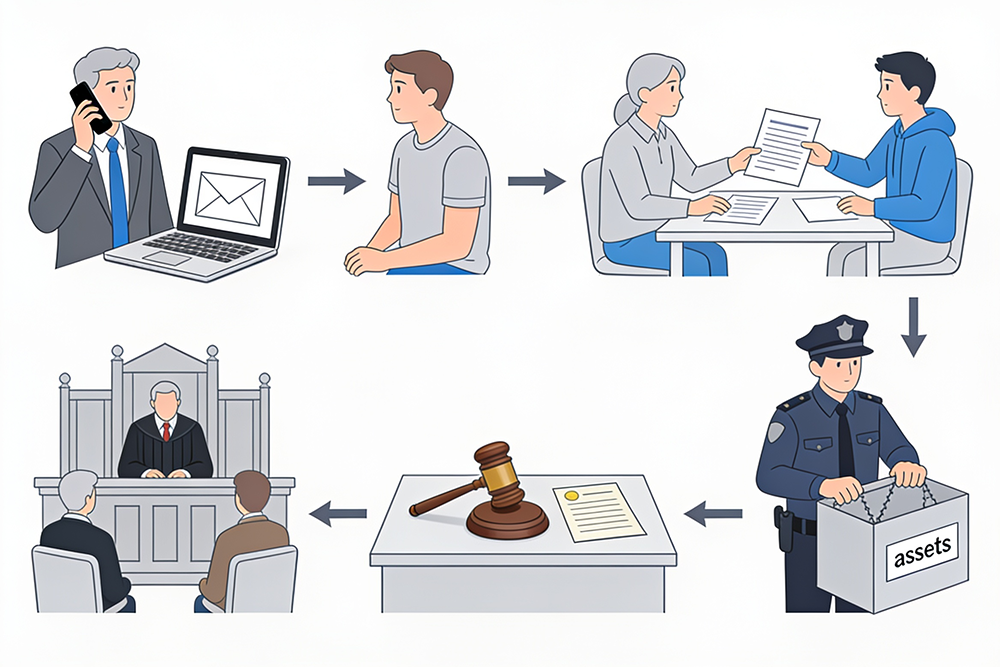
When an invoice goes unpaid for months, many businesses find themselves stuck. They have sent the reminders, made the polite phone calls, and heard the classic debtor stalling line that the payment is going out Friday a thousand times. When a debtor refuses to cooperate or ignores your outreach entirely, you must understand exactly how the commercial debt collection process works and how a claim safely escalates from standard agency collection activity into formal legal litigation.
Phase One: Verifying the File and Ingestion
Once a client hires us and submits a claim, the very first thing we do is verify the file. We immediately review the documentation, such as the contracts, invoices, statements, proof of service, communications, and payment history, whatever supports the fact that the money is actually owed.
This initial verification step is absolutely vital for your protection. We also look at whether the debt is still within the statute of limitations for the state or jurisdiction where the debt resides. This is important because we cannot just collect on all debts forever. We need to know exactly what we are working with before we start applying real strategic pressure.
Once we verify the claim, the file gets entered into our secure system. From that point forward, every single action is fully documented, as in every call, email, letter, note, update, promise to pay, dispute, or payment arrangement. It all gets tracked thoroughly. That consistent documentation protects us, protects the client, and keeps everyone on the same page and in the know.
Phase Two: Advanced Skip Tracing and Investigation
After the file is securely logged into our system, we perform a skip trace and background search on the debtor. If it is a corporate claim or a business debt, we also look deeply into the business itself and the individual principals of it.
This investigative phase is a crucial component of modern debt recovery because it helps us understand exactly who we are dealing with. Our team is looking for current physical addresses, verified phone numbers, active emails, business entity registration status, possible corporate assets, related companies, ownership information, and anything else that can help us get a clearer picture of their financial standing.
You cannot collect on a past due account unless you have the correct, up to date contact information. Once we confirm the correct address through our search, we send the legally required validation letter that informs the debtor of the debt along with their right to dispute the claim. This step has to be done properly because compliance matters from day one.
Phase Three: Strategic Collection Activity
After the legal notifications are sent, we finally begin the actual collection work. We start making strategic calls, sending targeted emails, mailing letters, sending text messages where legally allowed, and utilizing credit reporting or credit related pressure where applicable and permitted.
We are not just randomly calling the debtor over and over again. There is a precise method to our approach. The tone, timing, and pressure all matter significantly. At this point in the lifecycle of a file, the debtor usually falls into a certain predictable category. Some people pay immediately, some set up payment plans or negotiate a settlement, some may formally dispute the claim, some may ignore us completely, and some flat out refuse to pay.
If we are able to get a structured payment plan or a settlement worked out, we monitor it closely since a promise to pay means nothing unless somebody is following up consistently. A lot of debtors will make one payment and then disappear again. So we stay on top of it and make sure they stick to the terms of the agreement.
Phase Four: Escalation to Legal Litigation
If the debtor refuses to cooperate, ignores the claim entirely, or we believe the file needs to be escalated, then we look at the legal route. At that point, we can have one of our affiliate attorneys in the debtor’s jurisdiction review the claim. The local attorney may send a formal demand letter on behalf of the client and recommend immediate litigation.
If the affiliate attorney recommends filing a lawsuit, we go back to the client and explain the recommendation, the likely court costs, and what the legal process may look like. Then the client has a decision to make. If they do not want to litigate, we can either close the file or continue working it as a collection agency, depending on what makes sense for that specific account.
If they do want to move forward with a lawsuit, the client pays the upfront legal costs, we forward those funds to the attorney, and then we act as the direct liaison between the client and the attorney handling the claim. Legal action can sometimes be super slow, it can take months or sometimes it can take years. It depends on the debtor, the court, the jurisdiction, whether they fight it, whether assets need to be located, and whether judgment enforcement becomes necessary. But once a file reaches that point, the goal is still exactly the same: do everything we legally can to get our client paid.
The Pitfalls of Handling Enforcement In House
Many business owners mistakenly believe they can save money by keeping this entire process in house. However, a lot of businesses and individuals either do not have the time, patience, legal knowledge, or know the proper tactics to successfully pursue overdue accounts consistently. With our experience, knowledge, and technologies, we have a much higher success rate than most in house collections teams.
Commercial debt collection is heavily regulated by federal frameworks like the Fair Debt Collection Practices Act and the Consumer Financial Protection Bureau regulations. If an amateur internal collector contacts the wrong person, discloses a private debt to someone they should not, threatens an action they cannot legally enforce, calls at the wrong times, ignores a formal dispute, or makes an error on the balance owed, the client can end up with a bigger problem than the unpaid invoice.
An amateur collector can easily make a debtor angry, defensive, or lawsuit happy. Once the debtor feels attacked or sees the collector as sloppy, they stop cooperating and start looking for technical compliance violations to turn around and sue your company. Furthermore, waiting too long out of hesitation can be one of the most expensive mistakes. While you are waiting, a debtor might be moving money, shutting down bank accounts, transferring assets, changing addresses, or preparing for bankruptcy.
The Power of Proper Documentation and Human Judgment
To protect your business and maximize your recovery rates, clean and clear documentation is the most important tool you can maintain. You must have any or all of these items available: a signed agreement, invoices, statements, proof of work, payment history, emails, text records, chargeback details, bad check information, or prior promises to pay. A weak file makes collecting the debt harder, but a clean file gives us immense insight and legal leverage.
We rely on specialized collection software to track contact attempts, notes, letters, disputes, promises to pay, payment plans, client approvals, settlement authority, attorney escalation, and payment history. If it is not documented, it can become a massive problem later.
However, software alone does not replace experience. Tools can tell you where someone might be, but they do not tell you whether the debtor is stalling, scared, broke, lying, disputing in good faith, or worth suing. That part comes from human judgment. The best results come from solid data as well as real people applying the correct amount of pressure at the right times.
Secure Your Corporate Cash Flow Today
Do not let aging accounts receivable stall your business growth or drain your internal resources. Partnering with an all encompassing boutique firm takes the pressure, consistent follow up, and legal enforcement completely off your plate so you can focus 100 percent of your energy on running your day to day business. Our model is entirely straightforward: if we do not recover the money, you do not pay.
Take a proactive step to secure your outstanding revenue today. Explore our professional collection services and localized network offices across the country to establish a compliant, effective recovery strategy.
Learn more about our foundational corporate collection framework.
/ Connect with our regional collection specialists
/collection-agency-orlando-fl.html Discover our comprehensive business to business recovery solutions
/commercial-collections.html Review our tailored debt management options for growing companies
/collection-agency-for-small-business.html Optimize your medical billing recovery cycles
/medical-collections.html Enhance your broader customer portfolio compliance
/consumer-collection-management.html Enforce your outstanding uncollected court rulings legally
/judgment-collection-and-recovery.html
Contact HF Holdings Incorporated today to schedule a comprehensive evaluation of your outstanding invoices and let our professional team secure the money that is rightfully yours.